















なんで道頓堀?
→English
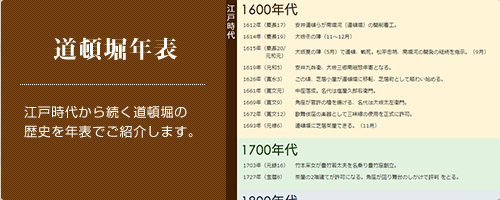
1612年に安井道頓(やすい・どうとん)が私財をなげうって開削に着手しました。
大阪夏の陣で道頓は戦死しましたが、従弟の道ト(どうぼく)が受け受け継ぎ、1615年に運河が完成しました。
開削者の名を取って道頓堀と呼ばれるようになりました。
1615年に道頓堀川が生まれ、江戸幕府が大阪を直轄領とし、市街地の拡張策をとった時から町がはじまりました。
沿岸のうち西横堀川との合流点を境に布袋、宗右衛門、御前、久左衛門、吉左衛門、立慶、久郎右衛門、 と町屋建設が進み川八町が誕生しました。
このうち、南岸は1653年芝居名代5棟が公認されてから歌舞伎、義太夫、見世物などの小屋が並んで栄え、五座の櫓(やぐら)が立って賑わい、櫓町と称される芝居町になりました。
1699年には、いろは47軒の水茶屋が免許されて軒を連ね、北岸の宗右衛門町、南岸の九郎右衛門町(現在の道頓堀2丁目)の花街とあいまって、町人文化の核となったのです。
The Origin of Dotonbori
Dotonbori traces its history back to 1612, when Doton Yasui started building a canal to extend the Umezu river.
The following year, Doton was killed in the siege of Osaka and his cousin, Doboku, completed the project in 1615. The canal was then named 'Dotonbori', Doton's canal, in his memory.
When the canal was completed, Osaka was territory of the Tokugawa government, which introduced planning to build new urban districts in the area.
Near the intersection of the Dotonbori and Nishi-Yokobori canals, tradesmen's houses were built in 8 areas, namely Hotei, Souemon, Onmae, Kyozaemon, Kichizaemon, Ryokei and Kurouemon.
The south bank of the Dotonbori was lined with a number of theatres of Kabuki and Gidayo as well as show tents after a permit to perform was issued to five theatres in 1653. Gidayo is a style of chanting with shamisen, a three-stringed musical instrument, developed by Takemoto Gidayo. The district was called Yagura-machi referring to the yagura, a towering structure, which the five licensed theatres built above their entrance to show official permission.
The Dotonbori area became the centre of Osaka's culture with its entertainment areas, such as Souemon-cho on the north bank and Kurouemon-cho, presently Dotonbori 2-chome, on the south bank. In 1699 there were 47 licensed teahouses called 'Iroha Chaya'.
1612年に安井道頓(やすい・どうとん)が私財をなげうって開削に着手しました。
大阪夏の陣で道頓は戦死しましたが、従弟の道ト(どうぼく)が受け受け継ぎ、1615年に運河が完成しました。
開削者の名を取って道頓堀と呼ばれるようになりました。
1615年に道頓堀川が生まれ、江戸幕府が大阪を直轄領とし、市街地の拡張策をとった時から町がはじまりました。
沿岸のうち西横堀川との合流点を境に布袋、宗右衛門、御前、久左衛門、吉左衛門、立慶、久郎右衛門、 と町屋建設が進み川八町が誕生しました。
このうち、南岸は1653年芝居名代5棟が公認されてから歌舞伎、義太夫、見世物などの小屋が並んで栄え、五座の櫓(やぐら)が立って賑わい、櫓町と称される芝居町になりました。
1699年には、いろは47軒の水茶屋が免許されて軒を連ね、北岸の宗右衛門町、南岸の九郎右衛門町(現在の道頓堀2丁目)の花街とあいまって、町人文化の核となったのです。
The Origin of Dotonbori
Dotonbori traces its history back to 1612, when Doton Yasui started building a canal to extend the Umezu river.
The following year, Doton was killed in the siege of Osaka and his cousin, Doboku, completed the project in 1615. The canal was then named 'Dotonbori', Doton's canal, in his memory.
When the canal was completed, Osaka was territory of the Tokugawa government, which introduced planning to build new urban districts in the area.
Near the intersection of the Dotonbori and Nishi-Yokobori canals, tradesmen's houses were built in 8 areas, namely Hotei, Souemon, Onmae, Kyozaemon, Kichizaemon, Ryokei and Kurouemon.
The south bank of the Dotonbori was lined with a number of theatres of Kabuki and Gidayo as well as show tents after a permit to perform was issued to five theatres in 1653. Gidayo is a style of chanting with shamisen, a three-stringed musical instrument, developed by Takemoto Gidayo. The district was called Yagura-machi referring to the yagura, a towering structure, which the five licensed theatres built above their entrance to show official permission.
The Dotonbori area became the centre of Osaka's culture with its entertainment areas, such as Souemon-cho on the north bank and Kurouemon-cho, presently Dotonbori 2-chome, on the south bank. In 1699 there were 47 licensed teahouses called 'Iroha Chaya'.

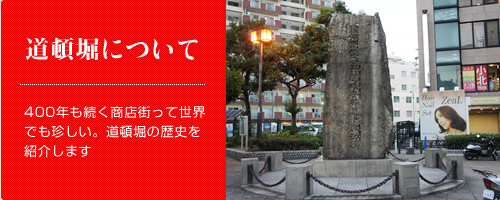
- 安井道頓・道ト紀功碑(日本橋北詰東) Monument for Doton and Doboku Yasui (the north side of Nipponbashi)